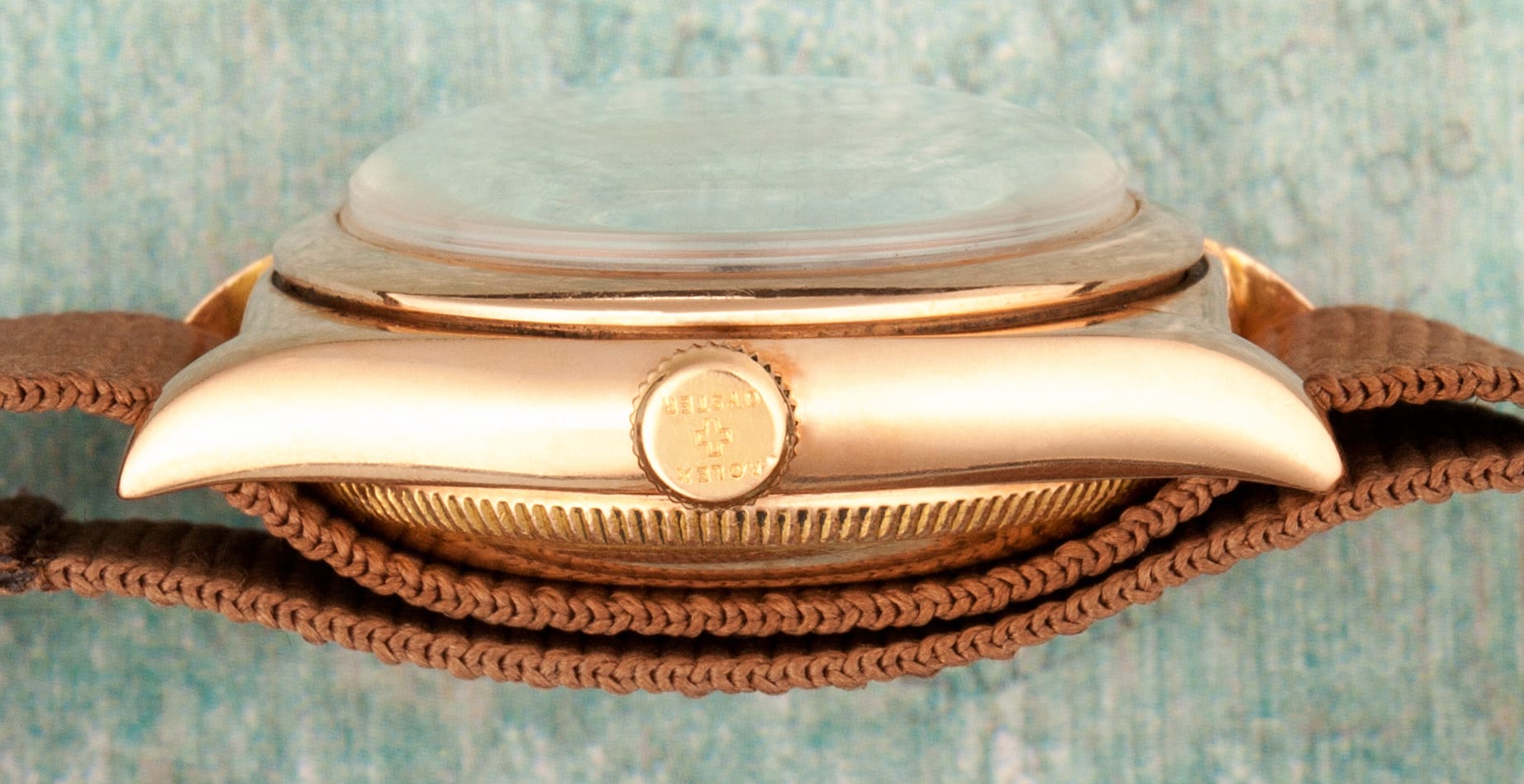
The Rolex Bubble Back is a legendary vintage watch made from the 1930s through the mid-1950s. The Bubble Back, as it is known, was the first commercially successful, mass-produced, self-winding wristwatch in Rolex’s legendary Oyster waterproof case. The Bubble Back was given its unique nickname due to its highly convex, or “bubbled,” caseback that allowed room for the increased thickness of the rotor used on the early automatic “Perpetual” movements. This guide will discuss the full history, design features, important references, and collecting tips on one of the most important watches in Rolex’s history.
The Bubble Back stands as Rolex’s earliest self-winding watch while being the first commercial self-winding wristwatch with a built-in Oyster case. As with any watch with a production run of more than twenty years, there are many important nuances to consider. During the production run, Rolex developed almost infinite varieties with dials, materials, and case sizes. Today, the title of “Bubble Back” is a general catch-all reference to one of the dozens of watch references that were made during this time period. This unique period in Rolex history has set the foundation for the history of the brand and the modern collector. The Bubble Back is well regarded today due to its history, beauty, and the tactile feel and novelty of an automatic wristwatch that is still relatively new.
Key Takeaways
- The First Self-Winding Oyster: The Bubble Back was Rolex’s first automatic watch to be cased in the Oyster waterproof housing.
- Production Era: They were produced from approximately 1933 until the mid-1950s, after which the design transitioned into the modern Oyster Perpetual references.
- Why the “Bubble”: The domed caseback was required to house the early self-winding mechanism’s thicker rotor, which was patented by Rolex in 1931.
- Pivotal Rarity: Today, vintage Bubble Back models are highly collectible due to the vast array of dial, metal, and case variations created during their two-decade run.
- Key References: Notable reference numbers include the 3131, 3372, and 5015.
The Bubble Back is the ancestor of every automatic Rolex currently in existence. It’s a particularly important technical milestone in the history of the brand, as well as a time of unusual design experimentation. For vintage watch collectors, the Bubble Back is also a highly desirable example. Read on for a detailed history of the model, as well as tips on spotting one to add to your collection.
The Rolex Bubble Back Explained: What is the Iconic Domed Caseback?
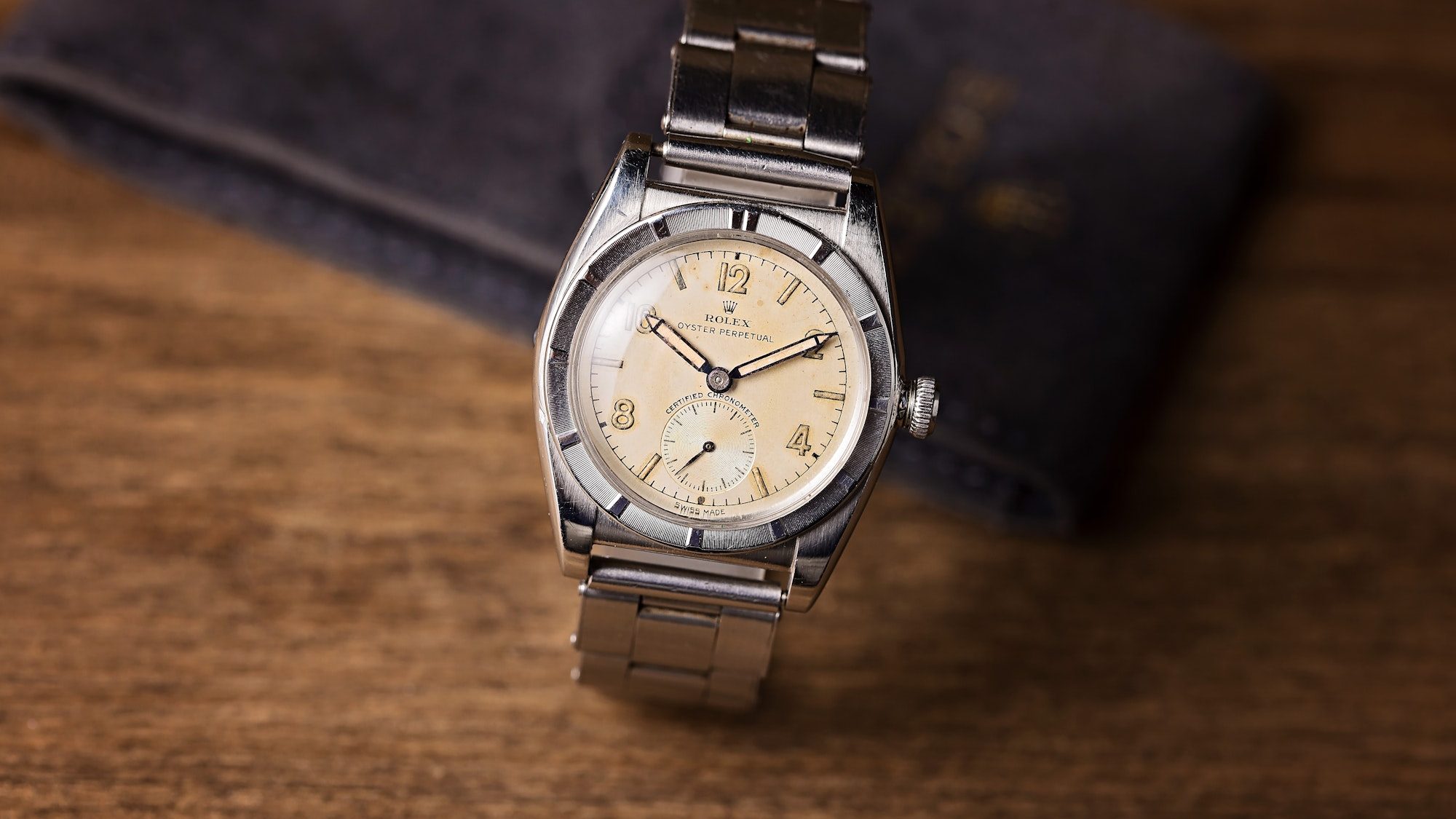
The bubble appearance of these early Oyster Perpetuals is a byproduct of the engineering problems Rolex faced in the early 1930s when it was trying to fit its new self-winding “Perpetual” rotor movement in the Oyster waterproof case. The “Perpetual” had an oscillation weight that made it much thicker than its manual-winding predecessors. As a result, Rolex had to dome the caseback quite dramatically, giving it the “bubble” profile when viewed from the side, in order to keep the overall height of the case the same as it was from the dial side.
In combination with the domed acrylic crystals, this gave these early models an unmistakable profile. They have had various nicknames over the years, but “Bubble Back” seems to be the term in most common usage today. I have always found it a bit of an “egg” shape, given the small diameter of the case combined with the relatively large thickness. Movement technology rapidly evolved during the 1940s and 1950s. Rolex developed a series of increasingly slimline and efficient calibers, which no longer required such radical doming of the caseback. This led to the evolution of flatter Oyster Perpetual references such as the 6010 and 6084/85, which were automatics but did not have the bubble profile.
Bubble Back vs. Modern Oyster Perpetual
| Feature | Rolex Bubble Back (1933–1950s) | Modern Rolex Oyster Perpetual |
| Caseback Shape | Highly Domed/Convex (“Bubble”) | Flat |
| Movement | Early Perpetual Movements (e.g., Cal. 9 3/4″) | Modern Perpetual Movements (e.g., Cal. 3230) |
| Diameter (Typical) | Small (30mm to 32mm, occasionally up to 34mm) | Larger (28mm up to 41mm) |
| Water Resistance | Early Oyster (Revolutionary at the time) | Modern Standard (100 meters) |
A Legacy of Innovation: Tracing the Rolex Bubble Back History (1930s–1950s)

The story of the Bubble Back begins when wristwatches were still establishing themselves as the preferred timekeeping format over pocket watches. Throughout the late 1920s and early 1930s, the vast majority of wristwatches needed to be wound by hand every day, which required unscrewing the crown on waterproof watches and possibly jeopardizing the seal. Rolex founder Hans Wilsdorf knew that a truly waterproof and practical watch needed to remove this daily manipulation. The solution, the Perpetual rotor mechanism, used the motion of the wearer’s wrist to keep the mainspring fully wound and ensured the Oyster case’s reliability. In the 1930s, Rolex began equipping its watches with automatic movements.
The Bubble Back was produced over roughly two decades of explosive growth for Rolex. The earliest examples, as early as the mid-1930s, were the prototype for the design. The 1940s were the era of the most production and a wide range of dial styles and case materials. In the 1950s, continued miniaturization of the movement allowed Rolex to move away from the bubble design to slimmer profiles. A later refinement to the movement made a curved, protruding caseback unnecessary, but these vintage Bubble Back watches remain a symbol of an era when most watches were wound by hand and automatic movements were in their infancy.
Key Production Years and Reference Numbers
- 1933-1934: Introduction of the first automatic Oyster watches with early references like 1858 and 2940, marking the commercial debut of the Perpetual movement.
- 1940s: Peak production years featuring the introduction of mid-size Bubble Backs, including the popular Ref. 3372 and Ref. 3131, both 32mm, which became some of the most recognizable models.
- 1945: Transition to Datejust models that utilized the Bubble Back movement structure, often with the same domed case profile, though later Datejust references evolved toward flatter designs.
- 1950s: The phase-out begins as flatter, more efficient calibers like the 645 are introduced, leading to the sleeker Ref. 6000 series and marking the end of the “Bubble Back” profile.
Dissecting the Bubble Back: Key Features and Design Elements
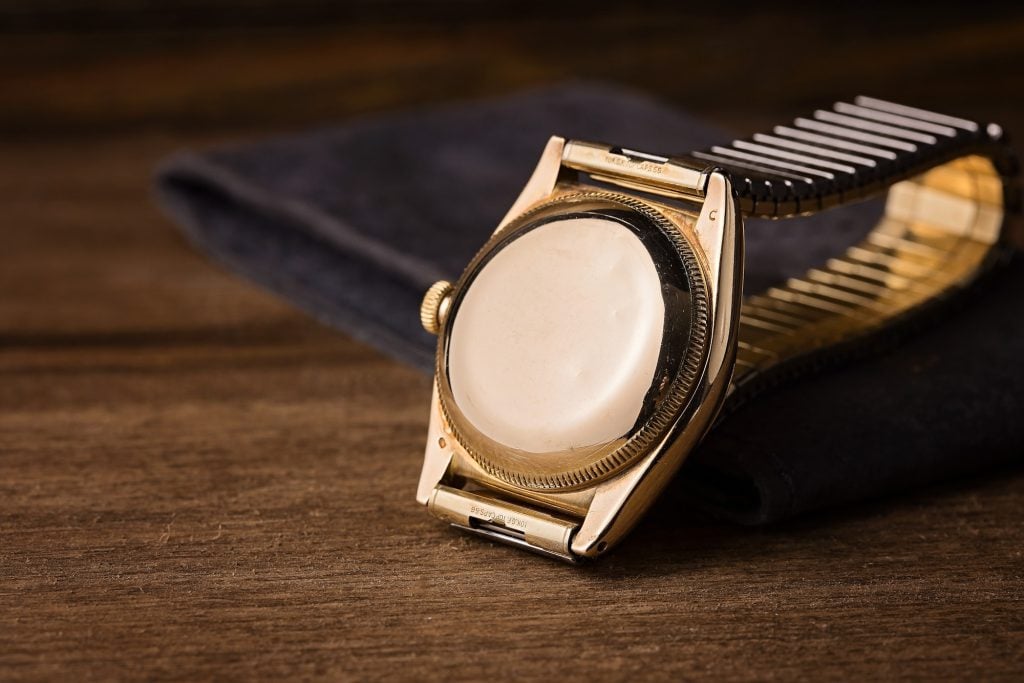
Collectors and enthusiasts should be aware of the technical and aesthetic characteristics of the Bubble Back watches. These watches were made during a time of significant experimentation, and there is a high level of variability, which can affect value and collectability. The movements, dials, and other components may all provide insight into the development of Rolex over the course of the 20th century.
The variety across the various Bubble Back references is a testament to both the resource constraints of the day, and Rolex’s efforts to segment the market. Consistent features notwithstanding, many aspects of the Bubble Back changed from one reference to another and varied by year of production and intended market. Next, we’ll discuss the main components of the watches and those to focus on when confirming authenticity and desirability.
Calibers and Movements: The Engine of Perpetual
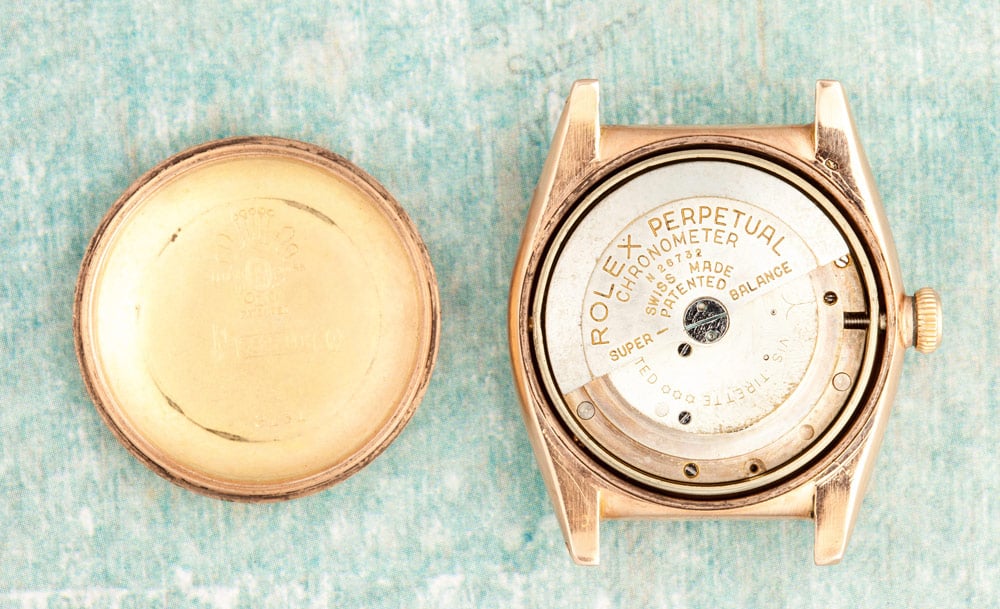
The key feature of any Bubble Back is its self-winding movement. At the time of manufacture, the technology was state-of-the-art. The rotor is designed to rotate in either direction, thus winding the mainspring in response to the natural motion of the wearer’s arm. The bidirectional winding system was an improvement over previous unidirectional systems and added to the reputation of the Perpetual movement for being dependable.
Key Movement Calibers:
- Caliber 9 3/4″: The original movement found in early references like the 3372, this caliber established the basic architecture for Rolex’s automatic movements.
- Caliber 10 1/2″: A later, larger movement that provided improved timekeeping performance and became the foundation for subsequent Rolex calibers.
- Bidirectional Self-Winding: Unlike some competing designs, the Perpetual rotor could wind the mainspring regardless of its direction of rotation, maximizing efficiency.
Dial Variations: From California to Black Gilt

One of the most interesting things about Bubble Back collecting is the large number of dial styles that were made during the 20 years of production. Rolex tried many different numeral styles, finishes, and textures for customers to choose from. Some dial types are very popular today and command a premium price due to rarity or style.
Notable Dial Types:
- California Dial: The instantly recognizable mix of Roman and Arabic numerals creates a unique visual balance. These dials typically feature Roman numerals in the upper half and Arabic numerals in the lower half, and are among the most desirable variations for collectors.
- Black Gilt Dials: Rare lacquer dials with gold printing that develop attractive patina over time. The contrast between the black background and gold text creates a sophisticated appearance.
- Honeycomb Dials: Feature textured surfaces that add visual depth and complexity, catching light in interesting ways.
- Explorer/Gilt Dials: Early versions with simple Arabic numerals and gilt printing that predate the official Explorer model, offering a sportier aesthetic.
The ‘Bubble’ Caseback, Case Diameter, and Materials

The design of the Bubble Back case varied by reference and time of production. The defining feature, the bubble caseback, remained constant but size, materials, and finishing varied according to target market and price point. By modern standards, Bubble Backs are small watches. The case diameter of the standard men’s reference is typically between 30mm and 32mm, though some are as large as 34mm. Paired with the small case diameter are the distinctive domed crystal and prominent caseback which combine to produce the watch’s signature proportions.
Case Characteristics:
- Metals: Available in stainless steel, two-tone steel and gold combinations, and solid gold in yellow, rose, and occasionally white gold. Solid gold examples command the highest prices today.
- Bezels: Configurations include smooth polished bezels, engine-turned textured bezels, and occasionally coin-edged bezels that added visual interest.
- Crowns: Early models featured the “Big Crown” design, while later references transitioned to the “Super Oyster” crown type with improved sealing characteristics.
Collecting the Vintage Rolex Bubble Back in 2025

Collectors interested in vintage Rolex will find the Bubble Back market to be a particularly fascinating area of focus. It’s developed a lot in the last decade, with a steady increase in prices for truly excellent examples, and generally much more reasonable prices for the more common references. Unlike many modern Rolex models where specifications are standardized and easy to verify, vintage Bubble Backs present unique challenges due to their age, the prevalence of replacement parts, and the wide variation in original specifications.
Research thoroughly before purchasing your first Bubble Back since certain factors could make an attractive watch turn into a disappointment. There’s an investment required to buy a great example, but it is well worth it to have a slice of early Rolex history right on your wrist.
Authentication and What to Look For
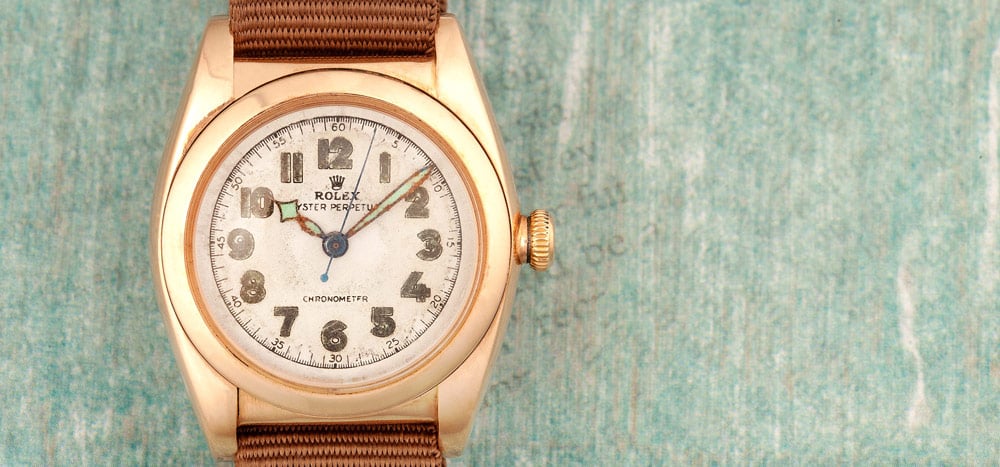
Determining the authenticity of a vintage Bubble Back involves checking numerous parts and features of the watch. Replacement of case and bracelet parts was common over the years due to service and natural wear. The first place to look to date the watch is the serial number engraved in the case between the lugs at 12 o’clock. The serial number can be cross-referenced with the reference number engraved between the lugs at 6 o’clock to give a good idea of the watch’s authenticity and approximate year of production against verified Rolex production numbers.
The movement caliber should also match up with the reference number to make sure it is the proper movement as many watches had the wrong movements installed. The dial of the watch also needs to be inspected carefully. As is often the case with vintage watches, “redials” are very common and can be easily spotted with careful examination of the font used and the quality of the printing as well as the signs of age of the original dial. The condition of the case is also important to note. While a simple polishing is acceptable, over-polished cases can be spotted by the lack of definition in the original lines and shape of the case. As always, final authentication should be left to a reputable vintage watch expert or dealer.
Value and Market Price Trends
Vintage Rolex, in general, has been on a remarkable bull run over the last decade, and the Bubble Backs are no exception. Keep in mind, though, that there is a 10- to 20-fold difference between prices of different rare dials, different case material, condition, and completeness/originality. A common dial steel Bubble Back in good condition might go for $5,000 to $8,500, but one with a rarer dial in solid gold will start at $30,000 easily. The California dial has become one of the most desirable and can double the price of an otherwise common reference.
Estimated Price Range by Reference:
| Reference Number | Material | Condition/Rarity | Estimated Price Range (USD) |
| Ref. 3131 | Gold | Standard, Good Condition | $5,000 – $8,500 |
| Ref. 3372 | Two-Tone or solid gold | Strong Patina, Clean Dial | $8,000 – $12,000 |
| Ref. 5015 | Solid Gold (Rose/Yellow) | Excellent, Original Dial | $15,000 – $30,000+ |
Collectors should approach pricing with realistic expectations and recognition that condition and originality often matter more than the specific reference number. An all original steel specimen with a perfect dial is almost always a better purchase than a solid gold version with a replaced part and a refinished dial. The market ebbs and flows, so buying a watch that you actually like as opposed to buying purely as an investment, will usually make you happier in the long run.
Winding and Care for Your Vintage Perpetual

Though the Bubble Back is a self-winding watch, it should be wound by hand upon first putting it on after a period of rest. To wind the watch manually, unscrew the Oyster crown in a counter-clockwise direction until it pops off the case threads and moves out slightly to the first position. Rotate the crown in a clockwise direction, feeling smooth resistance as the mainspring winds. 20 to 30 rotations should be sufficient to bring the movement to power and running. After the watch is running, regular wrist motion during the day will keep the Perpetual movement automatically wound.
Make sure always to screw the crown back down snug against the case. This is very important in keeping the watch with whatever water resistance its vintage Oyster case still has (vintage gaskets are rarely as protective as new ones however). Regular service by a watchmaker familiar with vintage Rolex movements is important as well. The watches are now 70 to 90 years old and their lubricants dry up, their gaskets harden and crack and their various parts wear. Service every three to five years will ensure reliable operation and keep the watch for future generations. Vintage Bubble Backs should be kept away from moisture, magnetic fields and extreme shocks as their old parts are much less robust than modern watches.
A Lasting Legacy for the Rolex Oyster Perpetual Bubble Back

The story of the Rolex Oyster Perpetual Bubble Back is a micro-history of modern horology itself. It transitioned the world from reliance on manually wound timepieces to the convenience of the automatic watch, setting the template for virtually every self-winding watch that followed. While production ended over half a century ago, its design elements continue to influence contemporary luxury watchmaking. The bubble profile remains an instantly recognizable symbol of early automatic watch technology, and the dial variations and case options explored during this era established design languages that Rolex would refine throughout subsequent decades.
While the Bubble Back may not receive as much attention as other vintage Rolex watches, these early self-winding timepieces hold arguably more importance to the brand’s evolution than any other wristwatch the company has produced. Today, nearly every Rolex has the word “Perpetual” printed on its dial, a testament to the lasting impact of these pioneering automatic movements. For collectors and enthusiasts, the Bubble Back offers a tangible connection to the early, experimental days of the most prestigious name in watches. Whether seeking a rare California dial or a classic gold model, working with expert dealers ensures access to certified, authentic pieces. To explore other iterations of the legendary Rolex brand, browse our full collection of authenticated vintage and contemporary models.