Can you call yourself a true watch collector if you don’t own at least one Patek Philippe? Widely considered to be the most prestigious watchmaker in the world, the Swiss brand has had an uninterrupted history of production for 185 years. Over that time, they have created more than 50 calibers and received more than 100 patents for their innovations. But far beyond their technical advances, their portfolio is stuffed to the gills with some of the most famous designs ever to grace a wrist. From the simple elegance of Calatrava to the icon that is the Nautilus, Patek Philippe has remained the epitome of horology excellence for generations.
Below, we have laid out everything you need to know to buy your Patek Philippe.
What Makes Buying a Patek Philippe Different
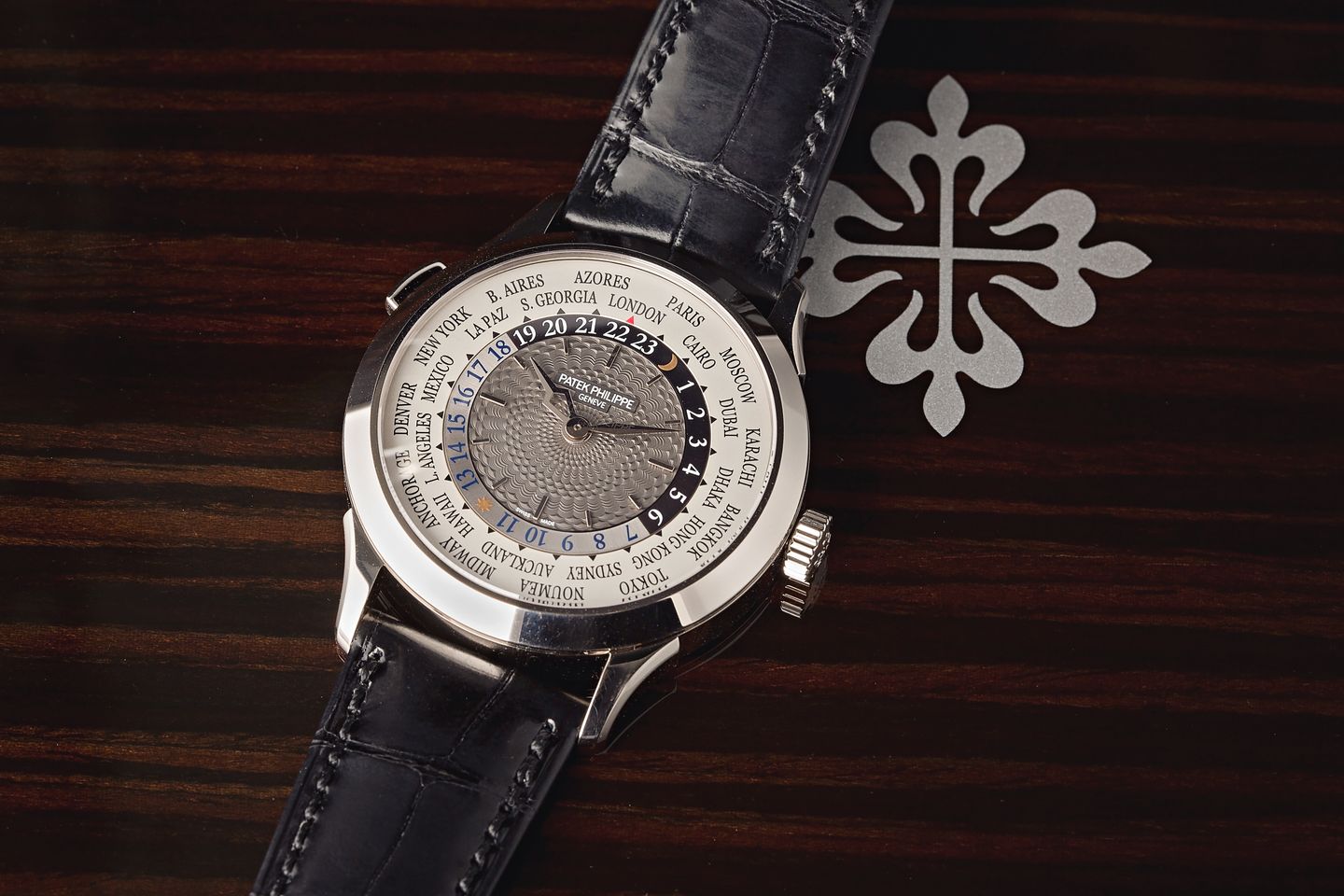
Patek Philippe was founded in Geneva in 1839 and has remained independently owned by the Stern family since 1932. That independence is not just a historical footnote. It means the brand has never had to answer to shareholders or prioritize volume over quality. The result is an annual production of roughly 60,000 – 70,000 watches, a number that stands in sharp contrast to brands like Rolex, which produces closer to 1 million to 1.25 million+ pieces per year. That limited supply, set against enormous global demand, is the foundation of everything that makes acquiring a Patek Philippe complicated.
The brand is consistently considered one of watchmaking’s “Holy Trinity,” alongside Audemars Piguet and Vacheron Constantin. Of the ten most expensive wristwatches ever sold at auction this century, eight were Patek Philippes. That level of market performance is not accidental. It reflects the brand’s reputation for quality, its strict control over distribution, and the cultural weight the name carries. When you understand that, the waiting lists and the dealer relationships start to make sense. Buying a Patek is not a transaction. It is a long-term engagement with a brand that takes those relationships seriously.
Retail or Pre-owned Patek Philippe?
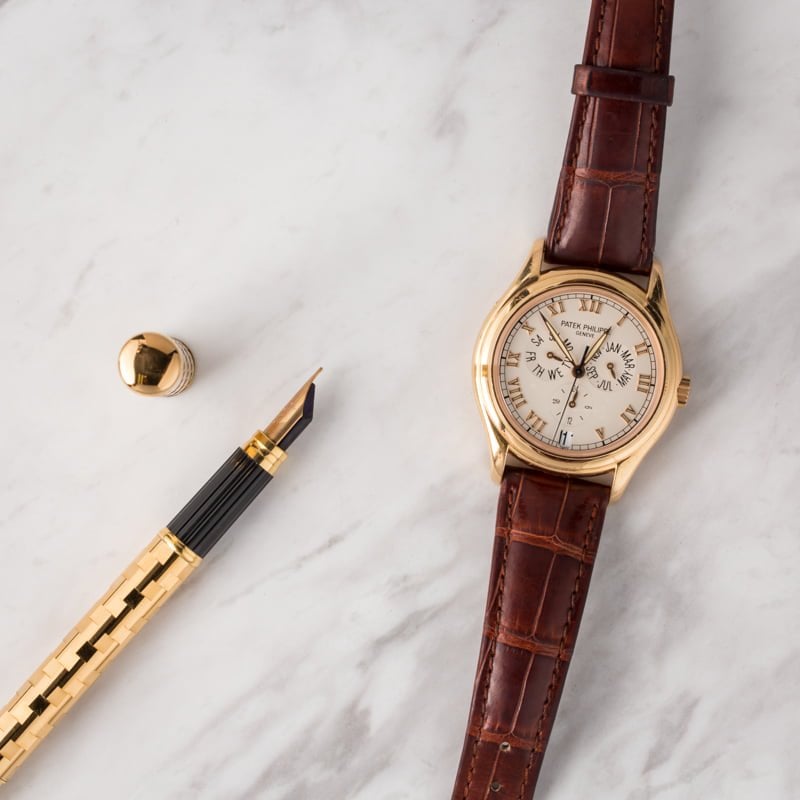
When considering how to buy a Patek Philippe watch, the first decision you’ll need to make is whether you want a unworn model or a pre-owned or vintage piece. This choice can greatly affect both the price and the overall style of your watch. An unworn Patek Philippe offers the latest advancements in technology, materials, and design, along with the assurance that you’ll be the first to wear it. Alternatively, a pre-owned or vintage Patek Philippe brings a sense of Patek Philippe history and individuality that newer models may lack, offering a unique charm that makes it highly appealing to collectors. Understanding this distinction is key when navigating your purchase.
How to Buy a Patek Philippe at Retail
Like most very high-end brands, Patek has their own network of authorized and licensed retailers, each owned and operated by third parties. At the present time, there are 78 of these dealers in the United States, and with the lack of any Salons in the country, they are the only places to go if you want an unworn watch and don’t fancy international travel. Again though, it is just not as easy as that. Most will only have a very limited number of models in stock, so there will be a struggle for the most coveted pieces here as well. If you’re like the majority of people who don’t want to want years down the road to possibly get a watch, the pre-owned market offers immediate availability.
How to Buy a Patek Philippe Pre-Owned
As mentioned in our Patek Philippe review, non-authorized dealers are those retailers not affiliated with Patek in any way, and as such, are not bound by any of their restrictions. Most sell online through their own websites, and they can be the best (if not the only) place to buy those exceptionally hard-to-find pieces immediately, without having to sit at the end of a five-year-plus waiting list.
Non-ADs (pre-owned retailers) charge whatever the market will bear. Inventory can sell quickly. Don’t be surprised if the model you want is selling out quickly. The pre-owned Patek Phillipe market is a good place to discover some of the best discontinued and vintage watches from the archives. However, it all comes with the usual word of caution; nowhere is the old adage of ‘buy the seller’ more fitting than in the horology industry.
While Patek’s extraordinary dedication to the very highest quality makes out-and-out fakes fairly easy to spot (if you know what to look for), “frankenwatches” – those assembled from different parts of genuine models, are far less so. Considering the level of outlay required for even the least expensive example, there really isn’t such a thing as doing too much research, on both the watch and the seller.
The Patek Philippe Collections
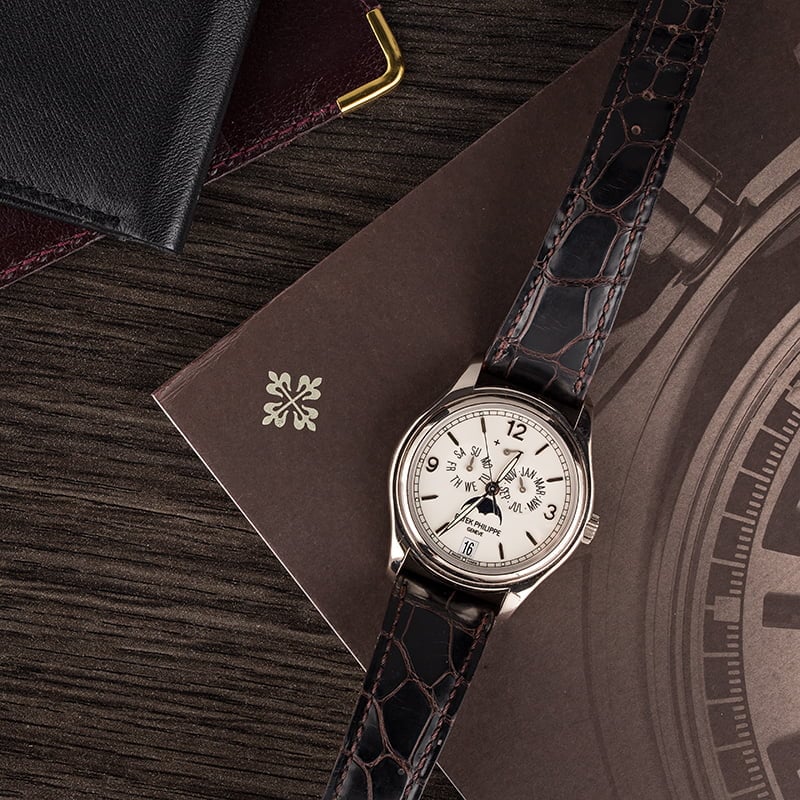
Patek Philippe’s lineup covers a wide range of styles, from clean dress watches to mechanically complex grand complications. Knowing which collection aligns with your interests, and your realistic access level, is the starting point for any purchase.
Below is a brief overview of the main collections, followed by a reference guide for first-time buyers.
The Core Collections at a Glance
Calatrava. The Patek Philippe Calatrava is the brand’s signature dress watch, first introduced in 1932. Inspired by the Bauhaus movement, these are typically round, clean, and understated, often cased in gold or platinum. For first-time buyers, the Calatrava is the most accessible collection in the lineup and the natural starting point for building an AD relationship.
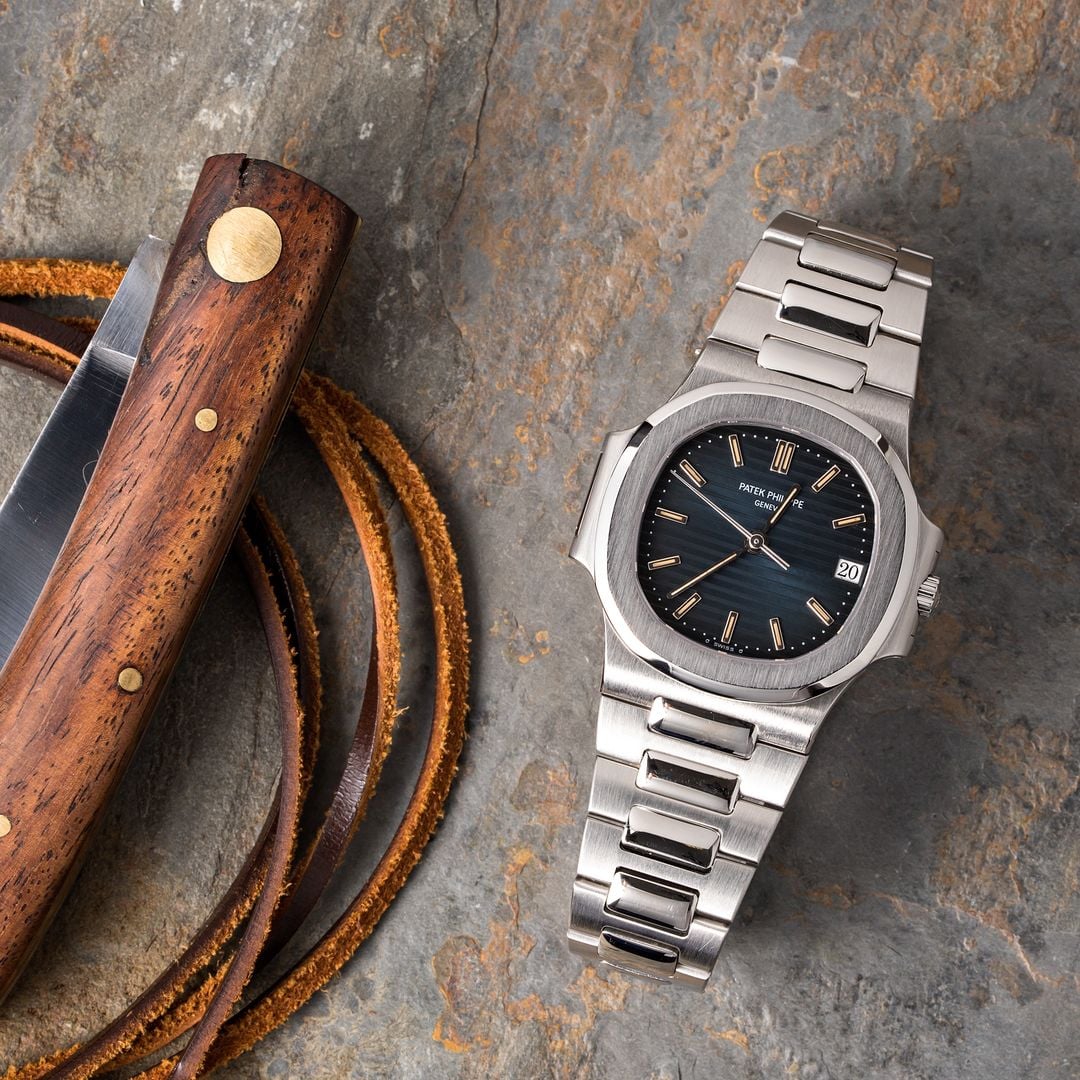
Nautilus. Designed by Gérald Genta and released in 1976, the Patek Philippe Nautilus is arguably the most recognized luxury sports watch in the world. Its distinctive porthole-shaped case and horizontally embossed dial have made it iconic. It is also the hardest model to obtain at retail, with waiting lists that can extend beyond a decade for steel references.
Aquanaut. Introduced in 1997 as a more contemporary sports option, the Patek Philippe Aquanaut shares the Nautilus’s DNA but with a rounded octagonal case and the brand’s signature “Tropical” rubber strap. Steel references are in high demand, though waiting times are generally shorter than the Nautilus.
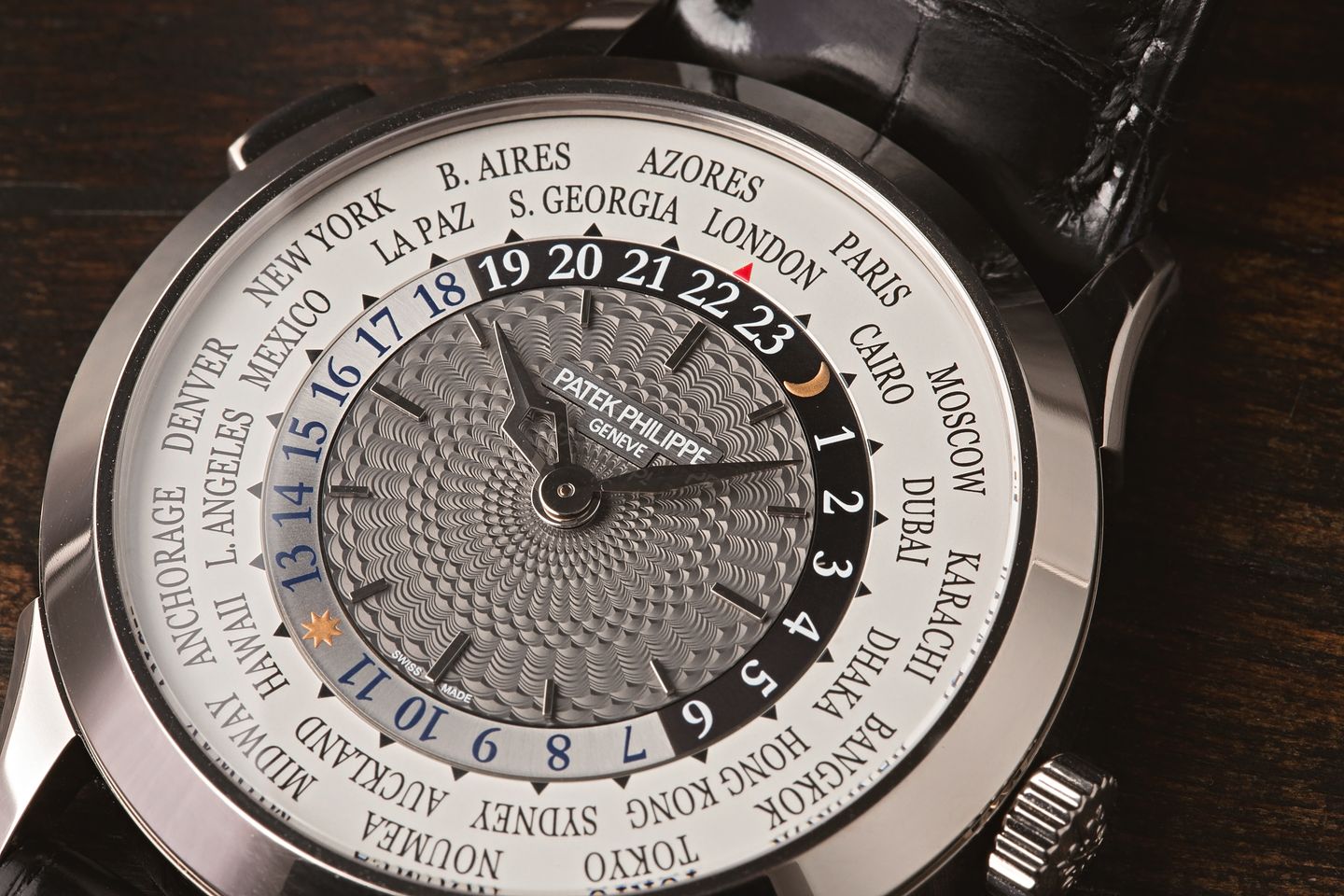
Complications. This collection features watches with two or three additional functions beyond timekeeping, including annual calendars, dual time zones, and moon phases. The combination of functionality and refinement makes it a strong choice for Patek Philippe Complication collectors who want substance alongside style.
Grand Complications. The most technically ambitious pieces in the collection, Patek Philippe Grand Complications incorporate at least three major complications, such as perpetual calendars, minute repeaters, and split-second chronographs. These watches are produced in small numbers and are generally reserved for collectors with a strong purchase history with the brand.
Golden Ellipse. First introduced in 1968, the Patek Philippe Golden Ellipse is defined by its distinctive oval case, which is based on the mathematical principle of the Golden Ratio. These are time-only watches with an elegant and unconventional profile. Waiting times are shorter than most collections, making this a smart entry point for buyers who want something genuinely distinctive.
Gondolo. Named after a Brazilian retailer that commissioned early versions of the watch, the Patek Philippe Gondolo features shaped cases, typically rectangular or cushion-shaped, with art deco detailing. Available and often priced near or below retail on the secondary market, it is worth considering for collectors who appreciate vintage-inspired design.
Twenty~4. The Patek Philippe Twenty~4 is designed for women, available in both round and square cases, with options in steel, gold, and with diamond settings. It is among the most accessible collections in the lineup, with shorter wait times and more predictable secondary market pricing.
Best Patek Philippe Watches for First-Time Buyers
| Model | Reference | Retail Price (approx.) | Market Price (approx.) |
| Calatrava | 6119G | ~$31,940 | $30,000 to $40,000 |
| Golden Ellipse | 5738R | ~$36,670 | $29,000 to $35,000 |
| Gondolo | 7041R | ~$36,080 | $24,000 to $32,000 |
| Aquanaut | 5167A | ~$24,250 | $55,000 to $65,000 |
| Twenty~4 | 4910/10A | ~$20,650 | Near retail |
| Complications | 5212A | ~$38,440 | $40,000 to $60,000 |
For buyers focused on getting a Patek Philippe at or near retail with a reasonable timeline, the Calatrava, Golden Ellipse, and Gondolo are the three collections most likely to be attainable through an authorized dealer. For buyers willing to pay a secondary market premium for immediate access, any reference in the table above can be acquired through a reputable dealer.
Tips for Buying a Patek Philippe for the First Time
Buying your first Patek Philippe is a significant decision. These practical tips apply whether you are going through an authorized dealer or the secondary market.
- Set a realistic budget before you shop. Retail price and secondary market price are often very different numbers for the same watch. Know which you are working with before you walk into any conversation.
- Learn the reference numbers. Patek’s naming system identifies the case, dial, material, and bracelet of each specific watch. Knowing the exact reference you want (for example, 5167A vs. 5167/1A) shows dealers and sellers that you are a serious buyer, not a casual browser.
- On the secondary market, buy the seller, not just the watch. The reputation of the dealer matters as much as the watch itself. Look for established businesses with verifiable reviews, transparent pricing, and written authenticity guarantees.
- Avoid back-channel “immediate allocation” offers. Any seller claiming to offer guaranteed unworn retail Patek Philippe watches outside of the authorized network, for a fee or through an intermediary, is not operating through legitimate channels.
- Consider the Patek Certified Pre-Owned program. For buyers who want a pre-owned piece with brand-backed authentication and a warranty, this program removes most of the risk associated with the secondary market.
- Buy what you will actually wear. Patek Philippe watches are made to last generations. Buy a reference you genuinely connect with, not just one that is currently in demand.
The Patek Philippe Buying Journey: Worth the Effort
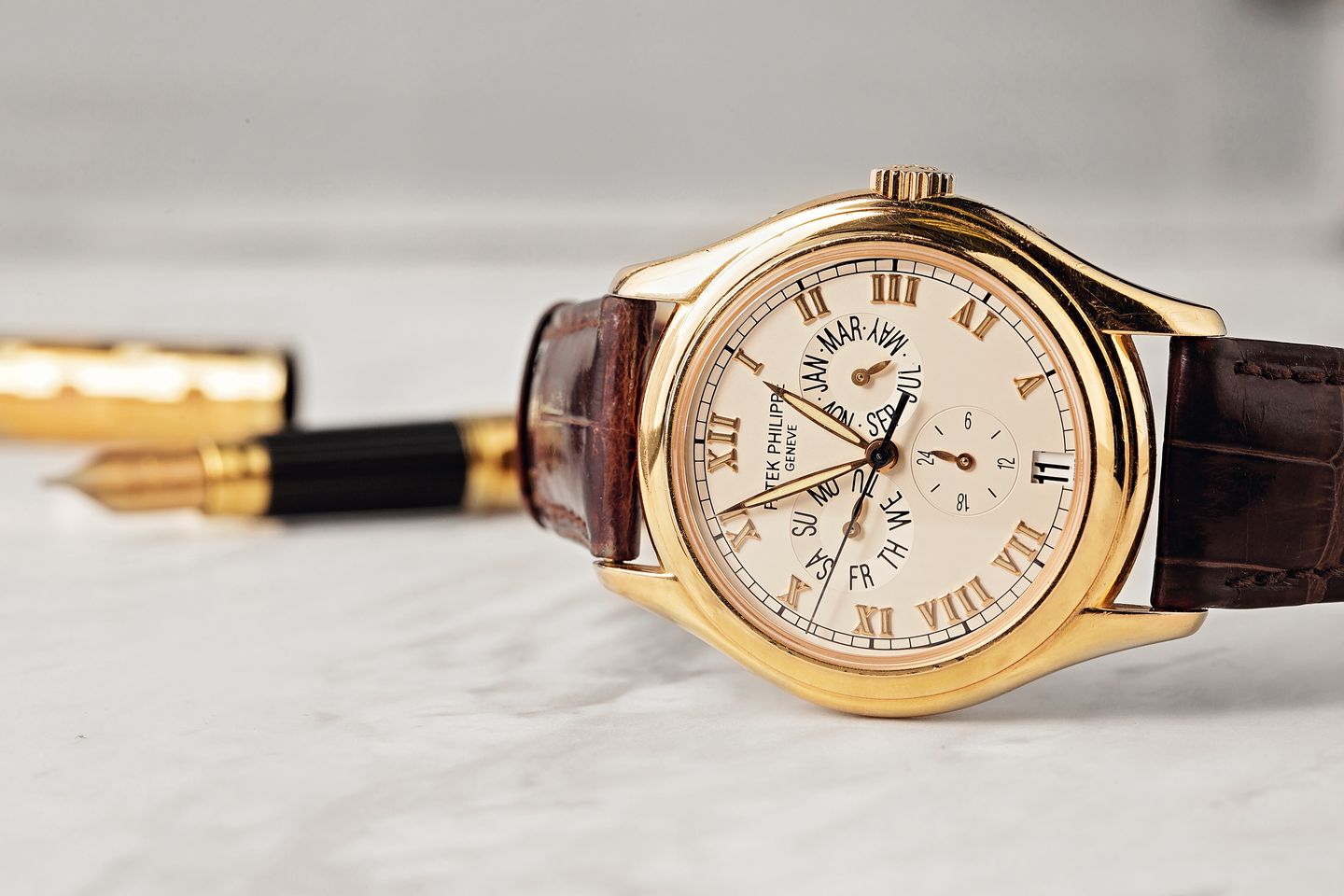
Buying a Patek Philippe is not always easy, and for the most coveted references, it genuinely requires time and persistence. The authorized dealer system rewards loyal, patient collectors, and the secondary market demands careful research and a willingness to pay a premium for access. Neither path is without its challenges, but both lead to the same destination: a watch that carries one of the most respected names in the history of Swiss watchmaking, and one that holds its value in a way that very few objects do.
Now that you understand how the system works, you are in a much better position to navigate it. Identify the reference you want, set a realistic budget, decide whether the authorized route or the secondary market better suits your timeline, and work with people you trust. That is the process. Done right, the watch you end up with is not just a purchase. It is the start of a collection.