When Patek Philippe trimmed prices on some models in the U.S. by roughly 8% on February 1, the move collectively raised eyebrows. A few weeks on, the more useful question is: what does it actually mean for buyers chasing the Patek pieces that matter (Nautilus, Cubitus, and Aquanaut) and how should one approach buying them now? We’re here to help navigate the always opaque waters of retail watch pricing.
Nautilus: Still Unobtainable at Retail

Crucially, the headline number overstated the impact for most collectors. High-demand, appointment-only models saw much smaller adjustments (closer to ~3–4%) while the full ~8% reduction applied primarily to less popular references. Regarding the most sought-after model, the Nautilus, nothing about the price adjustment meaningfully improves retail access. If you can even manage to get on an authorized dealer’s waitlist, expect to wait 5–8 years. Those with a strong purchase history, tens of thousands of dollars, at minimum, may see an allocation sooner, but only if they are very big spenders.
New buyers without a purchase history are rarely, if ever, offered a Nautilus at retail, making the AD channel comparable to the “unobtainable” (at retail) Rolex Daytona. The price rollback does, however, matter psychologically. On paper, if not in practice, it narrows the gap between retail and secondary pricing. But here, the nuance matters: with effective reductions closer to ~3–4% on these high-demand references, the real-dollar impact is modest.
On a modern Nautilus such as the 5811/1G, a ~3–4% adjustment equates to roughly $3,000–$4,000 off a ~$90,000 retail price. Against secondary market levels crossing six figures, that is effectively a rounding error, insufficient to materially change buyer behavior. Those fortunate enough to secure a Nautilus at retail rarely decline, even if it requires stretching financially. For everyone else, the secondary market remains the only realistic option. And increasingly, it appears more rational than overheated: buyers are still paying a premium for immediate access, but not at the extremes seen at the peak.
Cubitus: A Model Still Finding Its Price
The Patek Philippe Cubitus meanwhile, while no longer brand new, still commands multi-year waitlist dynamics due to extremely tight allocations. The price cut on this model is less about demand and more about ongoing positioning within Patek’s sport lineup, as the brand would like it to sit in the same tier as the Nautilus and Aquanaut. Where the Cubitus differs is in how the price adjustment is likely to be felt. Given current allocation constraints, Cubitus likely falls closer to the 3-4% reduction range.
On a roughly $40,000 piece, that implies a real-world adjustment closer to $1,500–$3,000, depending on the reference and configuration. That is enough to influence early buyers, particularly in a model line that has yet to fully stabilize on the secondary market. As Paul Altieri, founder and CEO of Bob’s Watches, notes, “secondary will continue to be the true price discovery mechanism” for Cubitus, a dynamic likely to persist until supply and demand reach equilibrium.
Aquanaut: The Most “Honest” Market
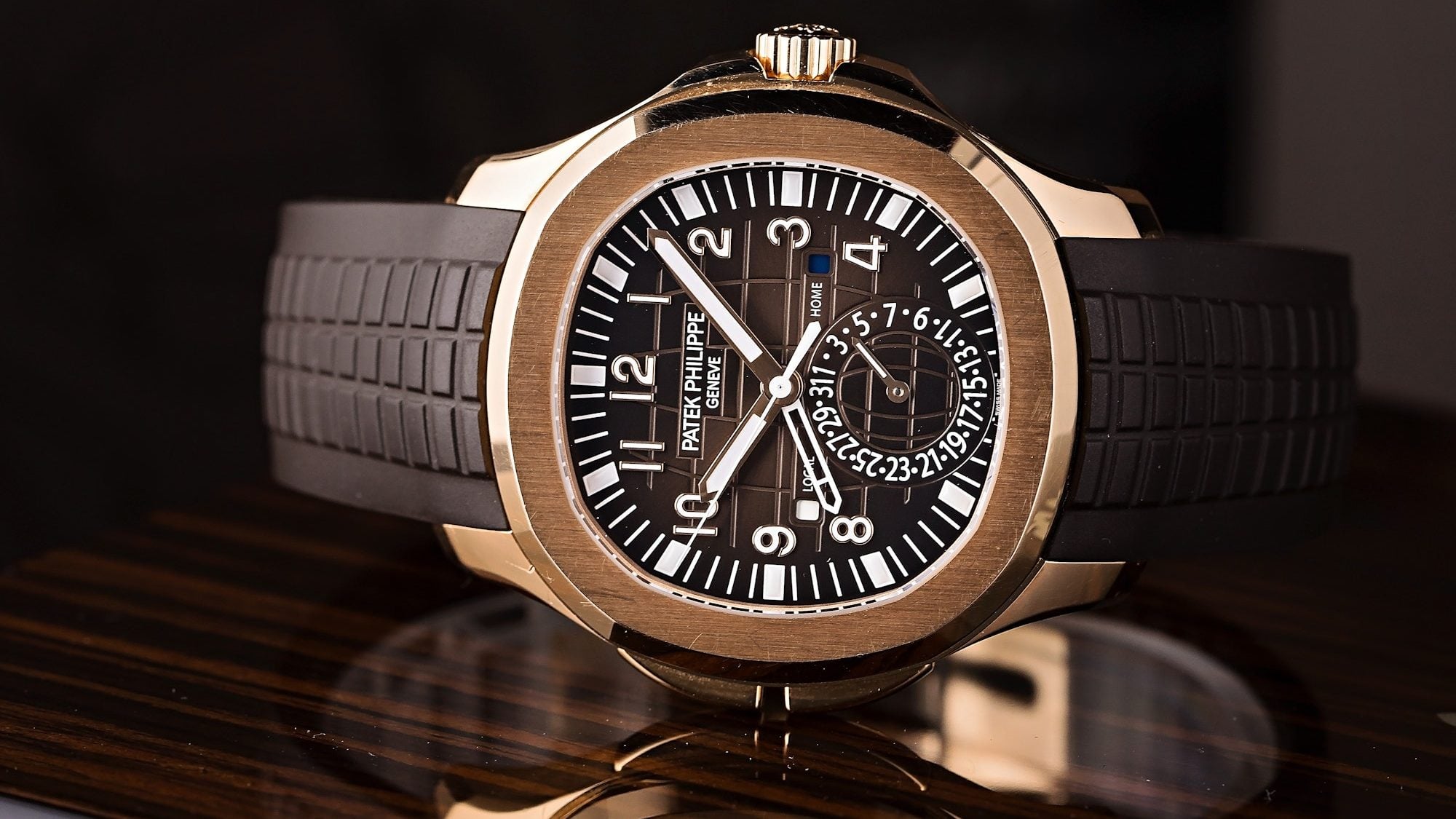
As for the Aquanaut, you could say it represents the most exposed and arguably most “honest” market among Patek’s sport models. With typical wait times of 3–5 years, access remains heavily relationship-driven. The Aquanaut “sits at the intersection of demand and accessibility,” Altieri notes. But like the Nautilus, it falls into the category of high-demand models that saw more modest adjustments (closer to ~3–4%) than the headline 8%.
At a ~$25,000–$30,000 retail level, that translates to roughly $1,000–$1,200 in actual savings. Not insignificant, but not transformative. What it does do is subtly compress the premium required for immediate access on the secondary market. “For the first time in years, the premium for instant Aquanaut access feels less like a leap and more like a step,” Altieri says. “It’s primarily a lifestyle purchase first, and a financial asset second. One we highly recommend.”
The Bottom Line: Time Is Money

Across all three model lines, one constant remains: retail acquisition time carries a real cost. “Waiting three to eight years, or indefinitely, is not neutral,” Altieri notes. “It means tying up capital elsewhere while missing out on the enjoyment of ownership.” All in all, the price adjustments mean “you are no longer paying peak irrational premiums, you are buying closer to true market value,” on the secondary market, Altieri asserts. “Onerous retail waiting lists haven’t changed, but the economics of bypassing them now make a lot more sense.”